
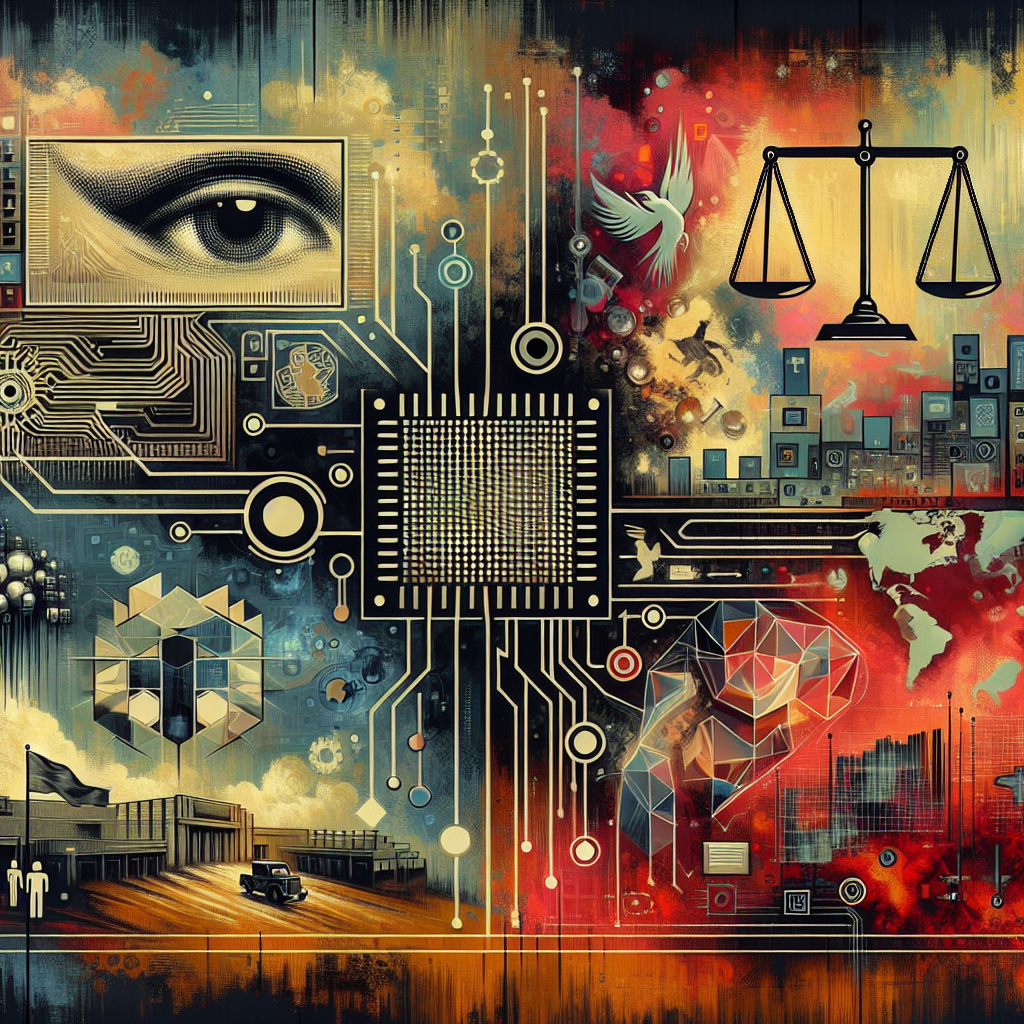
The emergence of artificial intelligence (AI) represents a revolution in technology, reshaping industries and transforming our everyday experiences. Yet, as Dr. Maria Randazzo from Charles Darwin University starkly notes, this rapid evolution threatens fundamental human dignity and rights. While AI systems promise efficiency and innovation, their lack of transparency and accountability poses serious risks to privacy, autonomy, and societal standards. In the race to adopt AI, we must consider not only its capabilities but also its potential to undermine the ethical frameworks that guide our judgments and decisions.
Dr. Randazzo identifies the “black box problem,” a term that encapsulates the challenge of understanding how AI systems make decisions. The algorithms driving these systems often function as inscrutable entities, making it nearly impossible for users to discern the rationale behind decisions that affect their lives. As AI systems increasingly permeate crucial sectors like law, healthcare, and finance, the implications of this problem become more pronounced. Individuals may find themselves at the mercy of automated systems, unable to contest or even comprehend outcomes that may violate their rights.
Regulatory responses have lagged behind technological advancements. Currently, the U.S., China, and the European Union take divergent approaches towards AI regulation, with varying degrees of emphasis on market mechanisms, state controls, or human-centered frameworks. Dr. Randazzo argues that while the EU’s human-centric approach is commendable, it still falls short of global aspirations. Without a unified commitment to ensuring that AI reflects humanity’s core values — choice, empathy, compassion — we risk entrenching systems that reduce individuals to mere data points.
Dr. Randazzo highlights that AI shouldn’t be confused with genuine intelligence. Unlike humans, AI operates solely on pattern recognition and lacks emotional engagement, memory, and wisdom. This critical distinction underscores the necessity for responsible AI governance that prioritizes human dignity over mere technological advancement. Understanding AI as an engineering triumph rather than cognitive mastery helps us calibrate our expectations and regulations. If we do not advocate for a human-centered AI narrative, we could be inadvertently engineering systems that deepen social inequalities, amplify biases, and lock individuals out of justice.
As the capabilities of AI continue to expand, so too does its societal footprint. This presents an urgent call to action for policymakers and stakeholders worldwide. Engaging with diverse voices — from technologists to ethicists, and from civil rights advocates to everyday users — is crucial to shape a future where AI serves humanity responsibly and equitably. We stand at a crossroads where proactive engagement is vital to ensure the ethical development of AI that enhances, rather than detracts from, human dignity.
Want to explore how AI can optimize your business or automate key workflows? Book a free 15-minute call with Kick-Start.ai to get personalized help.
In conclusion, the integration of AI into society represents both incredible promise and ominous threats. As Dr. Randazzo aptly illustrates, the opacity of AI increases the potential for oversight and misjudgment, demanding deft governance to ensure transparency and accountability. Rapid technological advancement should not compromise our collective rights; rather, it should empower us to enhance our human experience. It’s imperative that we unite around impactful regulation, fostering a future where artificial intelligence truly enhances human dignity.