
Introduction
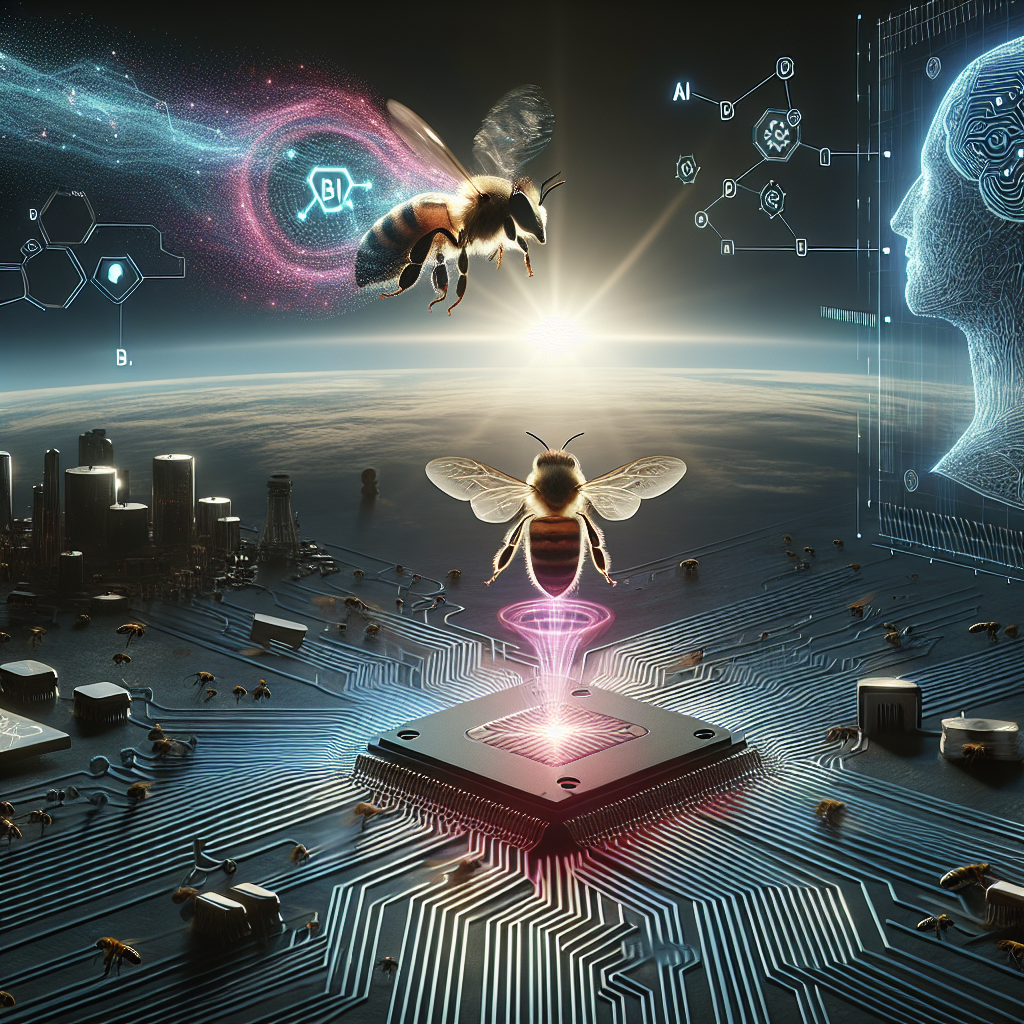
In the quest for smarter, more efficient artificial intelligence (AI), we often turn to large-scale neural networks and advanced algorithms that rely heavily on computational power. However, recent research indicates that nature may have a simpler, yet profoundly effective answer. According to a groundbreaking study from the University of Sheffield, bee brains, despite their small size, utilize flight movements to refine brain signals, enabling them to recognize complex patterns with surprising accuracy. This discovery could change the future of AI and robotics, steering us away from the notion that intelligence equates to size and computing capability.
The Science Behind Bee Brains
The study presents a digital model of a bee’s brain, showing how these small creatures enhance their neural processes through movement. As bees take flight, their bodies create unique paths through the air that significantly impact how their brains process and interpret visual stimuli. This active engagement with their environment produces clear and efficient neural signals that allow bees to identify and learn about their surroundings, such as recognizing flowers and navigating complex environments. This revolutionary view posits that much of intelligence stems not solely from the brain itself, but from the dynamic interplay between the brain, body, and environment.
Revolutionizing AI Development
Understanding bees’ cognitive abilities opens up new pathways for designing next-generation AI systems. By incorporating movement-based data gathering methods similar to those used by bees, future robotics could achieve high levels of efficiency without the need for massive networks of processors. This could lead to innovations in robotics that allow machines to learn and adapt in real time while performing tasks that usually require extensive computations. The implications are significant, particularly for applications in self-driving vehicles and other autonomous technologies.
Harnessing Nature’s Wisdom
Nature has perfected strategies for survival through millions of years of evolution, and the bee’s method of learning is a testament to the efficiency that can be achieved with minimal resources. Professor James Marshall, a principal investigator in the study, emphasizes that these findings demonstrate just how advanced insect brains can be. By replicating their strategies, AI development can be structured around agility and resourcefulness, traits characteristic of biological systems.
The Future of Learning
The research into bee cognition emphasizes that intelligence can be observed even at the smallest scales. With bees successfully able to tackle complex tasks like differentiating human faces using remarkably few neurons, the findings suggest that AI can learn to mimic these efficiencies. The team’s computational model shows that when subjected to visual challenges, a simplified network modeled after bee brains can outperform traditional systems, which underpins the necessity for redesigning our approach to AI.
Want to explore how AI can optimize your business or automate key workflows? Book a free 15-minute call with Kick-Start.ai to get personalized help.
Conclusion
As we advance toward more sophisticated AI technologies, it becomes evident that intelligence can emerge from simplicity and efficiency rather than brute computational force. Inspired by the adeptness of tiny bee brains, we may find ourselves at the brink of a transformation in AI and robotics that emphasizes not just learning and processing power, but a beautifully symbiotic relationship with the environment. As we harness these insights from nature, we pave the way for smarter, more effective AI systems that hold the potential to change the world.