
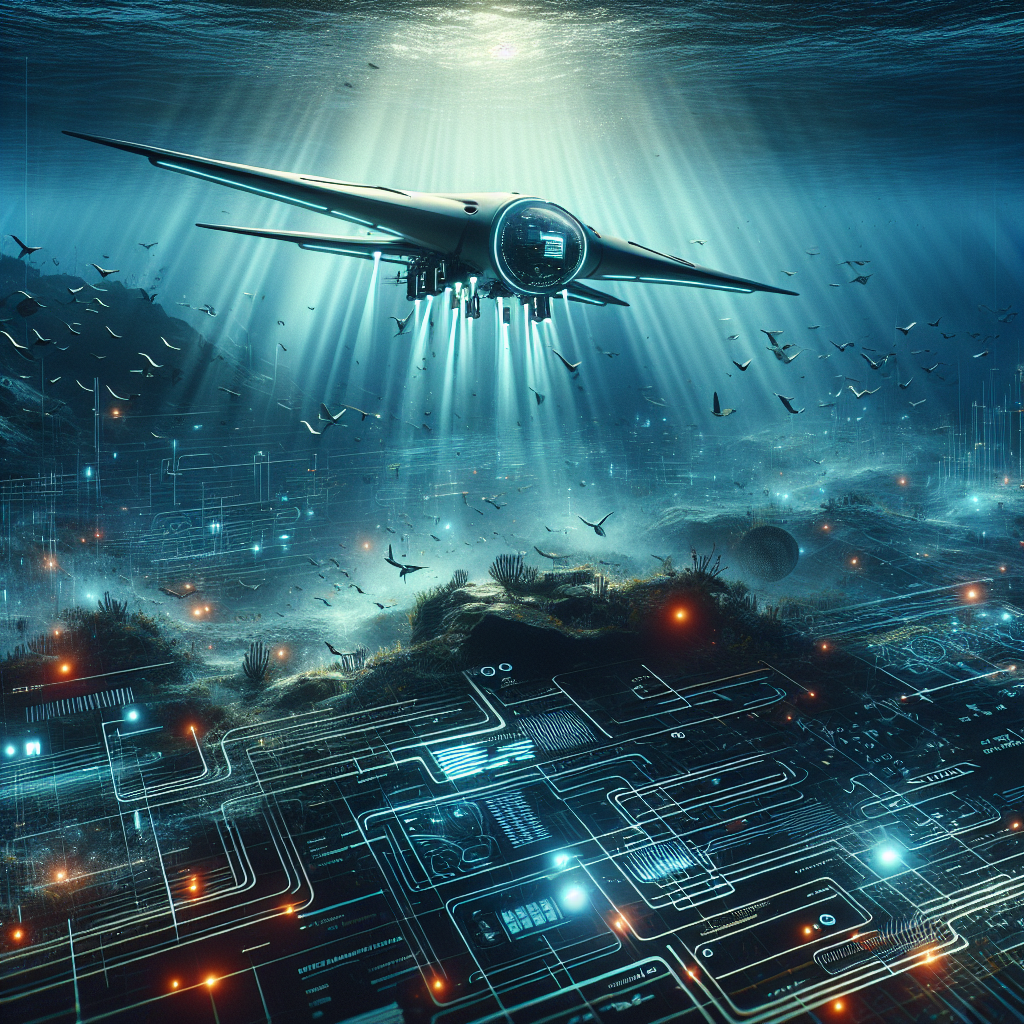
Marine scientists have long marveled at the elegance with which fish and seals traverse the oceans. Their efficient, hydrodynamic designs allow them to glide through water using minimal energy. Just like these fascinating creatures, autonomous underwater vehicles (AUVs) are being explored to collect crucial data about our underwater ecosystems. However, most existing AUV designs are limited, often resembling straightforward tubes or torpedoes. The challenge lies in creating innovative designs that can excel in various underwater environments. Now, researchers have unveiled a groundbreaking method using artificial intelligence (AI) that not only enhances design possibilities but could also revolutionize how we approach long-range ocean exploration.
At the MIT Computer Science and Artificial Intelligence Laboratory (CSAIL), teams have developed an AI pipeline that reimagines the design landscape for underwater gliders by automatically exploring hydrodynamic shapes that human designers may overlook. This innovative method first tests 3D design concepts in a physics simulator, allowing researchers to refine them into unique, hydrodynamic models that can be fabricated more efficiently via 3D printing. As a result, the research team produced two promising models resembling a boogie board—one being a two-winged machine similar to an airplane and the other, an unconventional four-winged glider inspired by flat fish.
The process begins with a collection of familiar underwater shapes, such as submarines and sea creatures. These designs are then manipulated using ‘deformation cages’ to generate a diverse array of new forms. The AI employs machine learning, simulating how each configuration would perform based on varying angles of attack—key to optimizing underwater traversal. By focusing on maximizing the lift-to-drag ratio, which measures efficient movement versus drag, the developed models aim to move through water as effortlessly as marine animals. This refined ratio is essential, paralleling those used in aviation where lift must be optimized for both takeoff and landing.
Before fully deploying their designs, researchers tested them in controlled environments to confirm the accuracy of their simulations. Both AI-engineered models exhibited higher lift-to-drag ratios compared to conventional designs, showcasing their potential for more efficient operation. The experimental results demonstrated that these adaptable gliders could significantly reduce energy expenditure, mirroring the effortless swimming style of oceanic wildlife. This initiative is not just about designing smarter gliders; it’s about enhancing our capacity to monitor climate change, assess water quality, and compile oceanographic data with a level of efficiency previously unattainable.
Looking ahead, the research team aspires to improve the adaptability of these vehicles in real-time conditions, guiding them to navigate changes in currents more effectively. The hope is to further explore not just new shapes but also compact designs that can be effective in varied scenarios, all while increasing the speed and efficiency of the deployment process. With these innovations, AI is paving the way for the future of autonomous underwater exploration, making it possible to gather invaluable marine data that holds immense importance for environmental sustainability and scientific research.
Want to explore how AI can optimize your business or automate key workflows? Book a free 15-minute call with Kick-Start.ai to get personalized help.
In conclusion, the melding of AI with underwater technology signifies a transformative shift in maritime science. By leveraging machine learning to generate innovative designs, researchers are not just optimizing glider efficiency; they are enhancing our understanding of the underwater world. Through this pioneering initiative, we can look forward to a future where collecting vital marine data is not only achievable but executed with superlative efficiency.